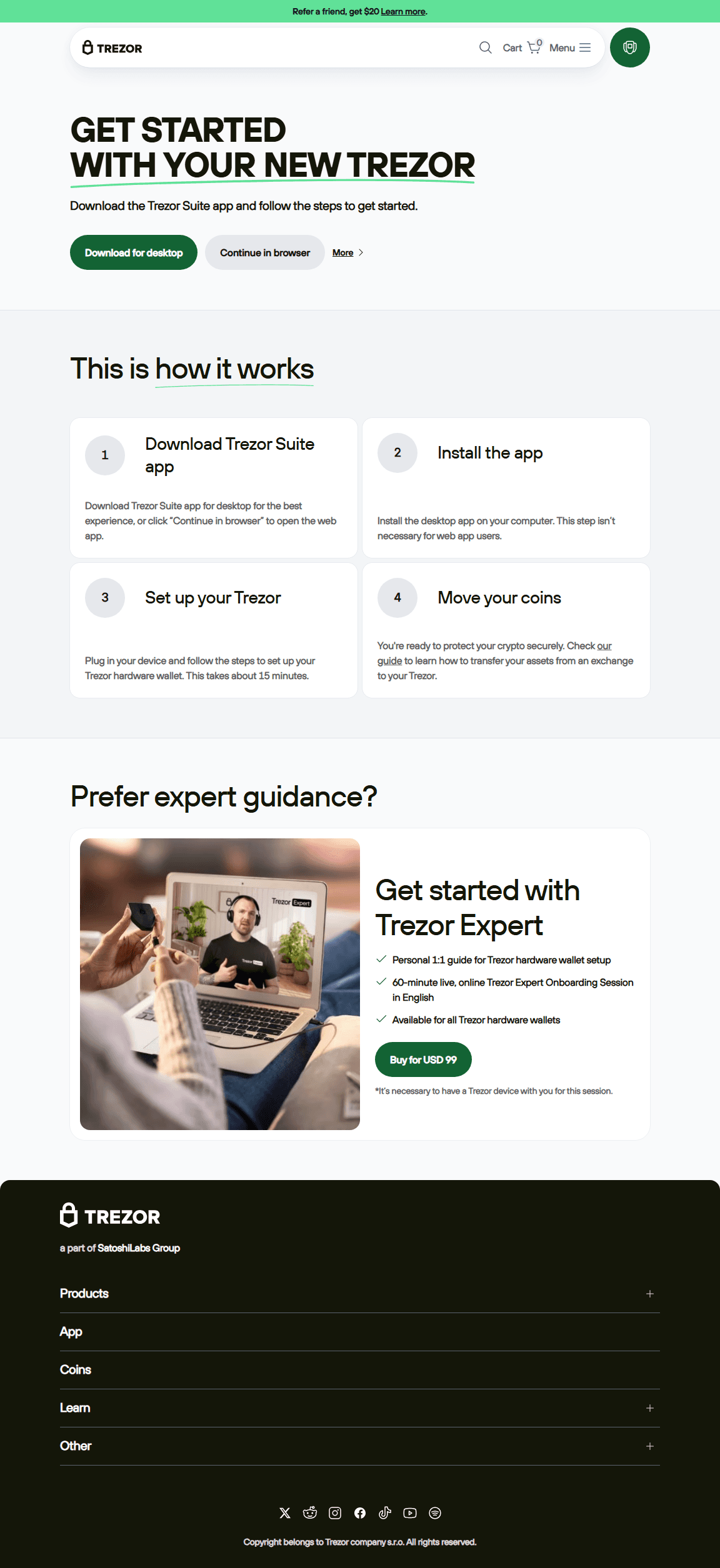
Trezor.io/start: A Beginner’s Guide to Setting Up Your Trezor Hardware Wallet
Cryptocurrency security is more important than ever, and a hardware wallet remains one of the most reliable ways to protect your digital wealth. Trezor, one of the first hardware wallet manufacturers, offers simple yet powerful tools to keep your crypto safe. If you’ve just unboxed a Trezor device, the official setup page Trezor.io/start is your starting point. This guide walks you through everything you will see, do, and understand on your way to creating a secure crypto wallet.
What Is Trezor and Why Use It?
Trezor is a small, portable hardware wallet designed to store private keys offline. Unlike software wallets or online exchanges, a hardware wallet completely separates your keys from the internet. This greatly reduces the chance of hacks, phishing attacks, and unauthorized access.
Trezor devices support major cryptocurrencies such as Bitcoin, Ethereum, Litecoin, and thousands of tokens. They are widely respected for their open-source design, transparent security standards, and simple user interface.
Why Trezor.io/start Is Important
Trezor.io/start is the official onboarding portal for all new Trezor users. It ensures that you install authentic software and follow verified setup instructions. Many fake pages exist online, so using this official link is crucial for safety.
The page provides:
Verified download links for Trezor Suite
Security instructions for first-time users
Device model selection
Steps for initialization and wallet creation
Guidance for backups and PIN setup
Starting from this page helps guarantee that you’re using legitimate resources, not counterfeit software.
What You Should Prepare Before Setup
Before visiting the setup page, it helps to gather everything you need:
Your new Trezor hardware wallet
A USB or USB-C cable
A computer or laptop
The provided recovery seed cards or plain paper
A few minutes without distractions
Because security is so important in the crypto world, preparing early ensures you don’t rush the steps involving your recovery seed.
Step 1: Visit Trezor.io/start
Open your preferred browser and type Trezor.io/start in the address bar. When the page loads, you’ll see options to choose your device model. Select the correct model so the guide can provide matching instructions.
Once selected, the site will prompt you to connect your Trezor using the provided cable. After plugging it in, your device will light up and display its welcome screen.
Step 2: Download Trezor Suite
Next, the page will instruct you to download Trezor Suite, the official desktop app for managing your wallet. Trezor Suite allows you to:
Create and manage multiple crypto accounts
Review your portfolio
Send and receive funds securely
Check market information
Update your device’s firmware
Installing Trezor Suite from the official site ensures you avoid harmful fake applications claiming to be wallet tools.
Step 3: Install the Latest Firmware
When you open Trezor Suite for the first time, the app will check whether your device needs a firmware update. Firmware updates strengthen security, add new features, and support more coins.
If an update is required, Trezor Suite will guide you through the process. This typically takes a minute or two, and you should not disconnect your device while it's updating.
Step 4: Create a New Wallet
After the firmware installation, Trezor Suite will ask whether you want to recover an old wallet or create a new one. Choose Create New Wallet if this is your first Trezor device.
This process securely creates the wallet inside the hardware itself. No private information is shared with servers or external locations.
Step 5: Back Up Your Recovery Seed
Your Trezor will generate a 12-word or 24-word recovery seed, displayed only on the device screen. This seed is the core of your wallet’s security.
Keep these rules in mind:
Write the seed down physically
Store it somewhere private and safe
Never save it digitally
Never take a photo of it
Never share it with anyone—not even support teams
Your recovery seed is the only way to recover your crypto if your Trezor is lost, stolen, or damaged. Treat it with extreme care.
Step 6: Create a PIN for Your Device
After backing up the seed, Trezor Suite will ask you to set up a PIN. This PIN protects the device from unauthorized access if someone physically takes it.
Your Trezor will show a scrambled number layout, and you enter the PIN on your computer using that pattern. This method keeps your PIN hidden from keyloggers or malware.
Step 7: Add Crypto Accounts
With your security set up, Trezor Suite is ready for managing your crypto. You can add accounts for different coins such as:
Bitcoin
Ethereum
Dogecoin
Cardano
ERC-20 tokens
Each account has its own address, history, and balance. The interface organizes everything in a clean and simple layout.
Step 8: Start Sending and Receiving Crypto
To receive crypto, Trezor Suite will display an address and ask you to verify it on your device. If the addresses match, you can safely share it with the sender.
To send crypto, you will enter the details in Trezor Suite and then approve the transaction on the Trezor device. This ensures that no transaction can occur without your physical confirmation.
Final Thoughts
Setting up your Trezor device using Trezor.io/start is the safest way to begin using your hardware wallet. The process is simple, secure, and designed for beginners. By following the steps—downloading Trezor Suite, backing up your seed, creating a PIN, and adding accounts—you can protect your digital assets with confidence.